The bilingual guide to cowboy boots, botas vaqueras, tejanas, botines, Western shirts, denim, leather, and authentic Mexican-American Western style.
Western clothing has a language of its own. Walk into a Western store and you'll hear words like vamp, roper heel, pearl snap, cattleman crease, and bootcut. In a Mexican Western store, you might hear botas vaqueras, tejanas, botines, camisas vaqueras, hebillas, and cinturones de piel.
Some terms describe the same item in two languages. Others refer to different traditions, constructions, or silhouettes. Understanding the difference makes it easier to find the right products, compare brands, and build a wardrobe that fits your lifestyle.
This English–Spanish Western wear dictionary explains 50 useful terms, how they're used, and what to look for when shopping. It's designed for American cowboy-style shoppers, Mexican vaquero fashion enthusiasts, and bilingual customers who want clear explanations without confusing terminology.
En pocas palabras: Esta guía explica los nombres de la ropa vaquera en inglés y español, incluyendo botas, sombreros, camisas, pantalones, cinturones y accesorios. También te ayuda a reconocer las diferencias entre estilos y elegir las prendas adecuadas.
Explore La Herradura's Western clothing and footwear while learning the vocabulary behind the styles.
Quick Reference: English and Mexican Spanish Western Wear Terms
| English term | Mexican Spanish term | What it describes |
|---|---|---|
| Cowboy boots | Botas vaqueras | Western-style boots |
| Western ankle boots | Botines vaqueros | Short-shaft Western footwear |
| Cowboy hat | Sombrero vaquero / tejana | Western hat |
| Straw cowboy hat | Sombrero de palma or paja | Lightweight woven hat |
| Felt cowboy hat | Sombrero de fieltro | Felt Western hat |
| Western shirt | Camisa vaquera | Western-style shirt |
| Pearl snap shirt | Camisa de broches | Shirt with snap closures |
| Jeans | Pantalones de mezclilla | Denim trousers |
| Bootcut jeans | Jeans corte bota | Jeans shaped to fit over boots |
| Leather belt | Cinturón de piel | Leather waist belt |
| Belt buckle | Hebilla | Belt fastening or ornament |
| Cowhide | Piel de res | Cattle leather or hide |
| Ostrich leather | Piel de avestruz | Ostrich leather |
| Caiman leather | Piel de caimán | Caiman leather |
| Python leather | Piel de pitón | Python leather |
| Square toe | Punta cuadrada | Wide or squared boot front |
| Round toe | Punta redonda | Rounded boot front |
| Boot shaft | Caña de la bota | Upper section covering the leg |
| Outsole | Suela exterior | Ground-contacting sole |
| Heel | Tacón | Raised rear portion of footwear |
These are useful shopping equivalents, not a claim that every regional expression is interchangeable. Terminology varies across Mexico, the United States, and individual Western communities.
Part 1: Cowboy Boots and Botas Vaqueras — Essential Footwear Terms
1. Cowboy Boots — Botas Vaqueras
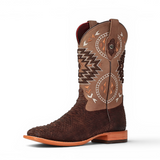
Cowboy boots are footwear associated with Western riding, ranching, and contemporary cowboy fashion. Traditional designs typically feature a raised heel, a shaped toe, and a shaft extending above the ankle.
Modern versions include work-oriented, riding, dress, fashion, and exotic leather boots.
What to look for: Fit, intended use, leather, outsole, heel shape, toe shape, and shaft height.
Español: Las botas vaqueras son un tipo de calzado del Oeste que se utiliza tanto para actividades relacionadas con el rancho como para vestir de manera casual o elegante.
Browse Men's Cowboy Boots or Women's Cowboy Boots.
2. Botines — Western Ankle Boots
A botín is a short boot; botines is the plural.
Western botines retain cowboy-inspired details but usually have a shorter shaft than traditional cowboy boots. They can be useful for casual outfits, dressier looks, and shoppers who prefer less coverage around the lower leg.
Botines are not necessarily Chelsea boots. A Western botín may feature pull tabs, a Western heel, decorative stitching, or an exotic leather finish.
Example: Ariat Booker Ultra Brown Oiled Rowdy.
3. Square Toe — Punta Cuadrada
A square-toe boot has a front profile with a squared shape. Some designs are broad and pronounced; others are narrower.
Square-toe styling is common in contemporary Western footwear, but toe shape alone does not guarantee a wide fit.
Español: La punta cuadrada describe la forma frontal de la bota. No significa automáticamente que sea de horma ancha.
Example: La Herradura LH010 Antique Two-Tone Python Square Toe Boots.
4. Round Toe — Punta Redonda
Round-toe boots have a curved front silhouette. They are associated with many traditional Western designs and can create a restrained, classic appearance.
Actual toe room depends on the boot's last, size, and width—not simply whether the toe is round.
5. Snip Toe — Punta Recortada
A snip toe has a tapered front ending in a short, flattened or cut-off tip.
It is frequently chosen for dress-oriented Western styling because it creates a sharper profile than many round or broad square toes.
6. Cutter Toe — Punta Cutter
A cutter toe is a relatively narrow Western toe shape associated with certain riding and performance-inspired designs.
Brands may interpret the shape differently, so inspect photographs and product specifications.
Example: Ariat Clearwater VentTEK Narrow Cutter Boots.
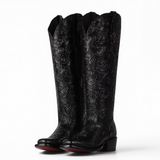
7. Boot Shaft — Caña de la Bota
The shaft is the upper portion of a boot that extends above the ankle.
Shaft height affects the silhouette, leg coverage, and compatibility with clothing.
A tall shaft may be useful for certain riding or outdoor applications, while shorter designs may suit everyday styling.
8. Vamp — Empeine / Parte Superior del Pie
The vamp is the upper material covering the front and top of the foot.
In Western footwear, the vamp is especially important because it displays the leather texture, toe bug stitching, and other decorative details.
For fit, the instep area is also important because pull-on boots rely partly on this region to hold the foot securely.
9. Toe Bug — Bordado Decorativo del Empeine
A toe bug is a stitched decorative motif placed on the vamp of certain cowboy boots.
It may appear as a symmetrical flourish, curved design, or traditional Western pattern.
A toe bug is primarily decorative. It does not automatically make a boot stronger, more authentic, or more expensive.
10. Boot Heel — Tacón Vaquero
The heel is the raised portion beneath the rear of the foot.
Western boot heels vary in height, shape, and intended use. Some are designed with riding traditions in mind; others prioritize walking, working, or dress styling.
The heel should be considered together with the outsole and overall boot design.
11. Roper Heel — Tacón Bajo Tipo Roper
A roper heel is typically lower and broader than a pronounced traditional riding heel.
This style is associated with roper boots and can be useful for people who prefer a less elevated heel profile.
It does not automatically make every roper boot suitable for occupational work.
12. Outsole — Suela Exterior
The outsole is the bottom layer that contacts the ground.
Common outsole materials include leather, rubber, and engineered compounds.
Leather soles can provide a traditional dress appearance, while rubber designs may offer different traction and wear characteristics.
Choose according to the surface, activity, and manufacturer specifications.
13. Welt — Vira de la Bota
A welt is a strip of material used in certain stitched footwear constructions.
It can connect the upper assembly to the outsole and may make repair or resoling more practical.
Not every cowboy boot uses a Goodyear welt; other traditional and modern construction methods exist.
14. EE Width — Horma Ancha
In many men's Western boot sizing systems, EE indicates a wide foot fit.
However, width conventions vary by brand.
Important: EE describes foot width, not calf circumference or shaft opening.
Consejo: Si una bota te aprieta a los lados del pie, revisa primero la anchura de la horma. Comprar una talla más larga no siempre resuelve el problema.
15. Exotic Leather Boots — Botas de Piel Exótica
Exotic leather boots use materials other than conventional cowhide, including certain ostrich, reptile, and fish leathers.
These materials have different textures, finishes, maintenance requirements, and legal sourcing considerations.
The word exotic should not be treated as proof of a particular construction method or quality grade.
Explore La Herradura Boots and Cuadra Boots.
Part 2: Western Leather — Pieles y Materiales
16. Cowhide — Piel de Res
Cowhide is one of the familiar materials used in Western footwear, belts, and other leather goods.
Its appearance and performance depend on tanning, finishing, thickness, and construction.
A smooth cowhide boot can offer a versatile appearance, while distressed finishes create a more worn-in aesthetic.
17. Full-Quill Ostrich — Avestruz Full Quill
Full-quill ostrich leather displays distinctive raised follicle marks.
It is often selected for premium Western footwear because of its recognizable texture.
Not all ostrich leather has the same appearance. Smooth ostrich and other cuts can look quite different.
Example: Cuadra Ostrich Flame Grey Point Toe Boots.
18. Caiman — Piel de Caimán
Caiman leather is known for its scale pattern and structured appearance.
Scale placement, finishing, and the specific portion of hide influence how a boot looks.
Caiman should not be confused with crocodile or alligator simply because all three may have visible scales.
19. Python — Piel de Pitón
Python leather is recognized for its patterned scales.
It can create a distinctive visual texture, especially when paired with contrasting leather or suede.
Care requirements differ from those of smooth cowhide. Avoid assuming that every standard leather cleaner or conditioner is appropriate.
Example: La Herradura LH010 Python Boots.
20. Pirarucu — Piel de Pirarucú
Pirarucu, also called arapaima, is a large freshwater fish whose leather is used in some distinctive Western footwear and accessories.
Its prominent scale-pocket pattern creates a different appearance from reptile leather.
When shopping, check whether the product is made from genuine fish leather or uses a printed imitation.
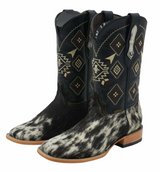
21. Cowhide Hair-On — Pelo de Vaca
Hair-on cowhide retains the natural hair surface of the hide.
It can create striking patterns and color variations.
Because hides vary naturally, two pairs may not have identical markings.
22. Suede — Gamuza
Suede is leather with a soft, napped surface.
It has a different texture and maintenance profile from smooth leather.
Use cleaning methods appropriate for suede rather than applying products intended for polished cowhide.
23. Nubuck — Nobuk
Nubuck is leather that has been buffed to create a fine, velvety surface.
It is distinct from suede in how the surface is produced.
Nubuck can show marks and moisture differently from smooth leather, so product-specific care matters.
24. Leather Lining — Forro de Piel
The lining is the material on the inside of the boot.
Leather linings can affect comfort, breathability, feel, and long-term wear, but performance depends on the entire construction.
25. Handcrafted — Hecho a Mano / Artesanal
Handcrafted indicates some degree of manual work in production, but it is not a standardized guarantee that every manufacturing step was performed by hand.
For premium footwear, look beyond the label and examine materials, stitching, finishing, construction, and verified manufacturer information.
Part 3: Cowboy Hats, Tejanas and Sombreros Vaqueros
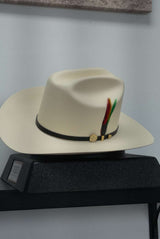
26. Cowboy Hat — Sombrero Vaquero / Tejana
A cowboy hat is a brimmed hat associated with Western clothing.
In Mexican Western shopping, tejana is a familiar term for certain cowboy-style hats.
The exact design varies by crown, brim, material, and shaping.
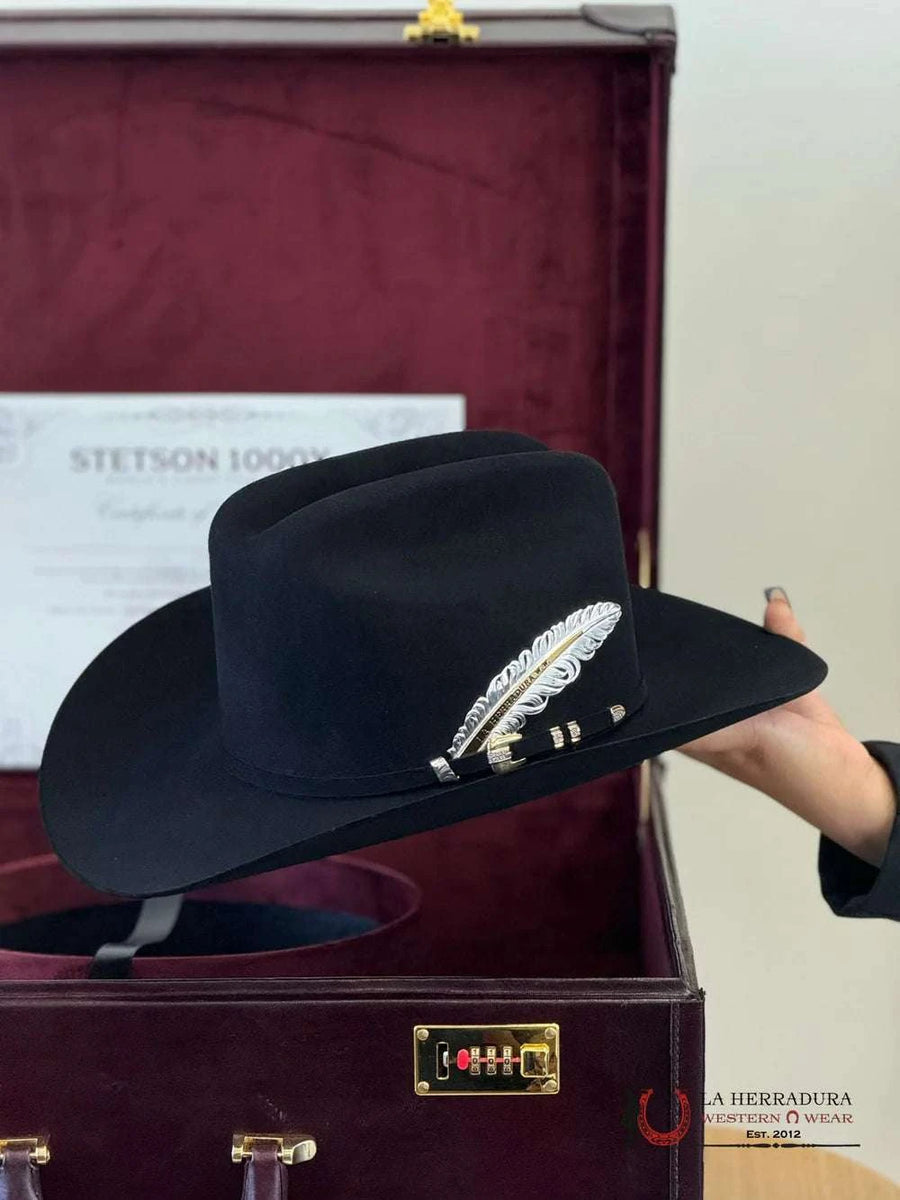
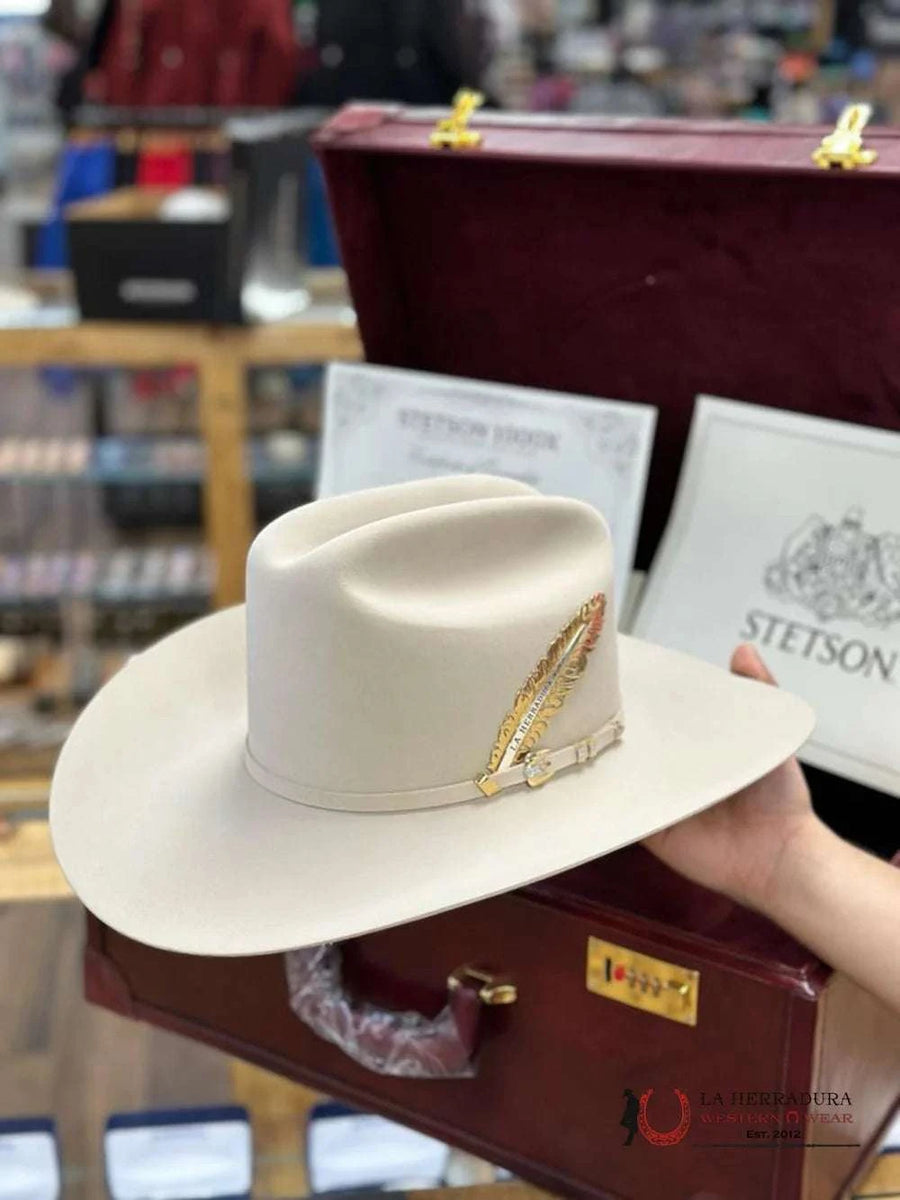
Explore Stetson Hats.
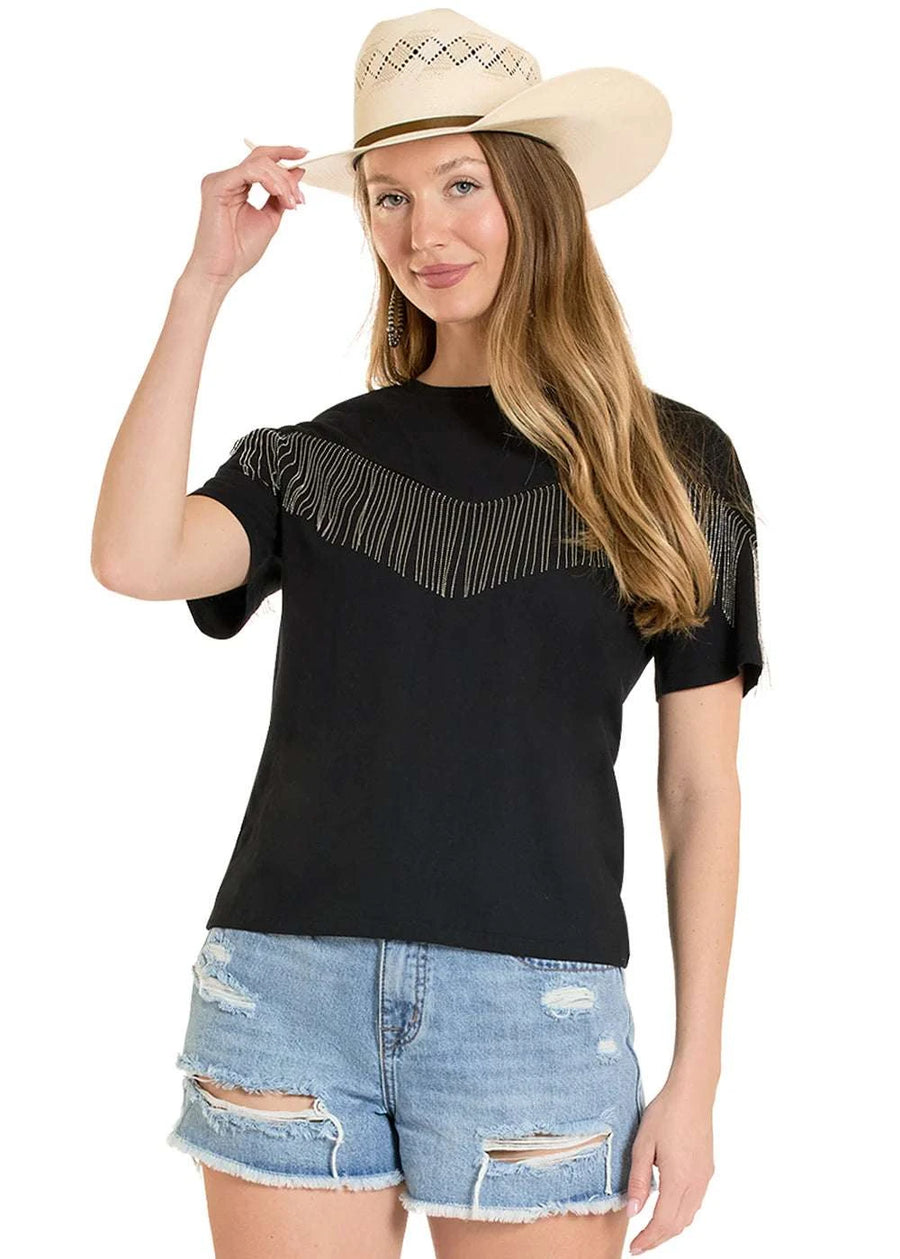
27. Straw Hat — Sombrero de Palma o Paja
Straw Western hats are made from woven plant-based materials or other specified fibers, depending on the product.
They are often selected for warm-weather use because of their weight, construction, and ventilation.
Not every straw hat is made from palm, so check the actual material.
Explore Straw Cowboy Hats.
28. Felt Hat — Sombrero de Fieltro
Felt Western hats are made from compressed fibers.
Depending on the product, these may include wool, fur blends, or other materials.
Felt hats are frequently associated with traditional dress Western style and cooler-weather wear, although personal preference and climate matter.
29. Hat Crown — Copa del Sombrero
The crown is the raised portion of the hat that sits over the head.
Its height and shape strongly influence the overall silhouette.
30. Hat Brim — Ala del Sombrero
The brim is the projecting edge surrounding the crown.
Brim width, curve, and shape affect appearance and sun coverage.
A wider brim may provide more coverage, but the actual amount depends on its dimensions and positioning.
31. Cattleman Crease — Copa Cattleman
A cattleman crease is a traditional Western crown configuration with a central crease and side indentations.
It is widely recognized in American cowboy hat styling.
32. Open Crown — Copa Abierta
An open-crown hat has not been permanently shaped into a particular crown crease.
It can offer flexibility for custom shaping, subject to the material and manufacturer's guidance.
33. Hatband — Toquilla
The hatband is a decorative band around the base of the crown.
It may be made from leather, fabric, metal, beads, or other materials.
In Mexican Western accessories, toquilla is commonly used for this decorative feature.
34. Hat Shaping — Hormado / Moldeado del Sombrero
Hat shaping is the process of forming or adjusting the crown and brim.
Some hats can be reshaped by trained professionals, but not every material responds the same way.
Avoid using excessive heat or steam without knowing the manufacturer's care instructions.
35. Hat Size — Talla del Sombrero
Hat sizing is generally based on head circumference.
Measure around the head where the sweatband will sit, then compare the measurement with the manufacturer's chart.
Do not assume that the same numerical size fits identically across all brands.
Premium example: Stetson El Diamante Black 1000X.
Español: Para elegir una tejana, mide la circunferencia de tu cabeza y revisa la tabla de tallas. La forma de la copa y el ancho del ala también influyen en cómo se ve y se siente el sombrero.
Part 4: Western Shirts, Denim and Ranch Clothing
36. Western Shirt — Camisa Vaquera
A Western shirt may feature yokes, snap closures, distinctive pockets, embroidery, or traditional cowboy-inspired proportions.
Modern versions range from workwear to dress shirts and fashion styles.
Browse Men's Western Clothing.
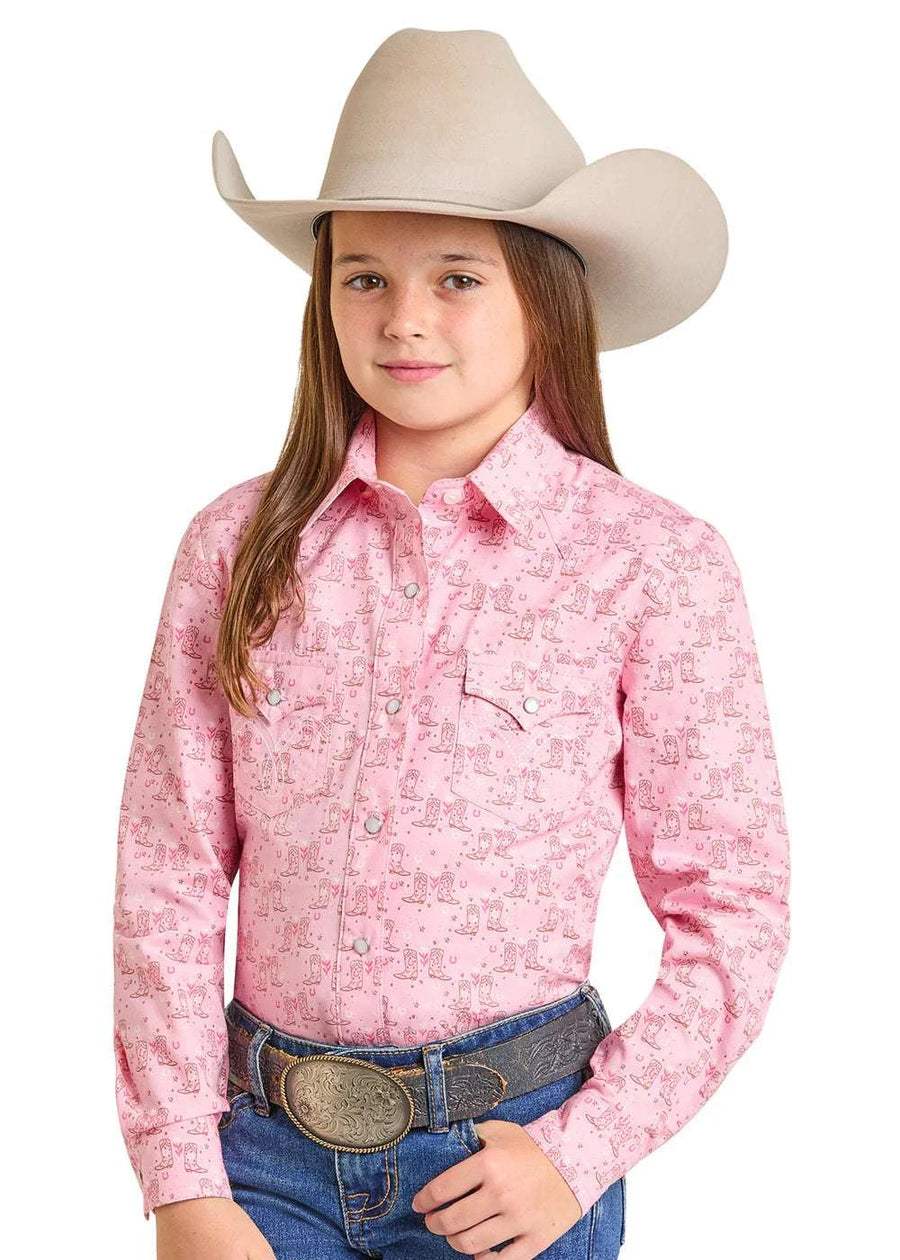
37. Pearl Snap Shirt — Camisa de Broches
A pearl snap shirt uses snap fasteners rather than conventional sewn buttons.
The snaps may have a pearl-like appearance, but that does not mean they contain genuine pearl.
Pearl snaps are a recognizable feature of many Western shirts.
38. Western Yoke — Canesú Vaquero
A yoke is a shaped panel commonly found across the shoulders or upper back of a Western shirt.
Yokes may be functional construction components and decorative design features.
Their shapes vary from subtle curves to pronounced Western points.
39. Plaid Western Shirt — Camisa Vaquera a Cuadros
Plaid shirts use crossing bands of color to form a checked pattern.
They are common in casual Western wardrobes because they work easily with denim and leather boots.
40. Embroidered Shirt — Camisa Bordada
An embroidered Western shirt features stitched decorative elements.
Designs can range from restrained accents to elaborate floral, geometric, or ranch-inspired patterns.
For a balanced outfit, let a highly embroidered shirt serve as the main statement piece.
41. Bootcut Jeans — Jeans Corte Bota
Bootcut jeans have a leg opening designed to accommodate footwear such as cowboy boots.
They can help denim fall over the shaft without excessive bunching.
42. Straight-Leg Jeans — Jeans de Corte Recto
Straight-leg jeans have a relatively consistent leg width from the knee downward.
Some fit comfortably over cowboy boots, but the opening must be wide enough for the shaft.
43. Stacked Jeans — Jeans con Stacking
Stacking describes the folds that collect around the lower leg when jeans are worn long enough to gather over footwear.
It is especially visible in certain Western denim styles.
Excessive length can create dragging or premature wear, so stacking should still be practical.
44. Denim Wash — Lavado de Mezclilla
A denim wash describes the color and finish produced during fabric treatment.
Dark wash, medium wash, light wash, and distressed finishes create different outfit effects.
Dark denim often works well with polished Western outfits, while lighter washes can feel more casual.
45. Western Jacket — Chamarra Vaquera
Western jackets may include denim, leather, suede, canvas, insulated materials, or other constructions.
Choose based on weather, fit, intended use, and the overall outfit.
Español: Una chamarra vaquera puede completar un atuendo ranchero, pero conviene elegirla según el clima y la ocasión, no solamente por su apariencia.
Part 5: Western Accessories — Cinturones, Hebillas y Complementos
46. Leather Belt — Cinturón de Piel
A leather belt is both a functional accessory and a central part of many Western outfits.
Tooled leather, smooth finishes, and exotic textures create different looks.
The belt does not need to match the boots perfectly, but compatible colors and materials help create a cohesive outfit.
Explore Premium Men's Western Belts.
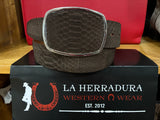
47. Belt Buckle — Hebilla
A buckle secures a belt and can serve as a decorative focal point.
Western buckles vary from understated metal designs to large, detailed statement pieces.
When the buckle is prominent, simpler surrounding accessories often help maintain balance.
48. Tooled Leather — Piel Cincelada o Grabada
Tooled leather has decorative patterns impressed, carved, or worked into the surface.
The method and depth of decoration vary.
Tooled belts and accessories are popular in Western styling because they add texture without necessarily requiring bright colors.
49. Western Wallet — Cartera Vaquera
Western wallets can feature leather tooling, stitching, embossing, exotic textures, and decorative metal elements.
For everyday use, construction quality and practical storage matter as much as appearance.
50. Vaquero Outfit — Atuendo Vaquero
A modern vaquero outfit combines Western pieces influenced by cowboy and Mexican ranch traditions.
A common combination is:
Botas vaqueras + jeans + camisa vaquera + cinturón + hebilla + sombrero.
But this is not a compulsory uniform.
A simple shirt with denim and botines can also create a recognizable vaquero-inspired outfit.
Español: El estilo vaquero no depende de usar todas las prendas al mismo tiempo. Un buen atuendo combina proporciones, materiales y colores de manera natural, según el gusto personal y la ocasión.
How to Choose Western Wear When Shopping in English or Spanish
Knowing the vocabulary is useful, but buying the right clothing requires more than recognizing the name.
Start With the Intended Use
For everyday wear, prioritize comfort, versatility, and suitable materials.
For ranch or outdoor work, consider the required protection, outsole, durability, and working conditions.
For weddings, bailes, concerts, and formal Western events, appearance and dress code may play a larger role.
Compare the Actual Specifications
Two products described as botas vaqueras may have very different toe shapes, shaft heights, widths, and sole materials.
Likewise, two hats called tejanas may differ in crown shape, brim dimensions, and fiber composition.
Do Not Confuse Appearance With Performance
A decorative boot is not automatically suitable for riding or occupational use.
An expensive hat is not automatically the best choice for hot weather.
A leather product is not automatically waterproof.
Specific construction and manufacturer information matter.
Build Around One Main Piece
If you choose highly textured exotic boots, consider understated jeans and a simple shirt.
If the shirt has bold embroidery, let it be the focus.
If your hat has a dramatic crown and brim, keep other accessories balanced.
This approach works across American cowboy style and Mexican vaquero-inspired fashion.
English–Spanish Western Outfit Examples
Everyday Cowboy / Vaquero Casual
English: Brown cowboy boots, straight-leg jeans, a plain Western shirt, and a leather belt.
Español: Botas vaqueras cafés, jeans de corte recto, camisa vaquera lisa y cinturón de piel.
This outfit works because it uses recognizable Western elements without excessive decoration.
Modern Mexican Western / Vaquero Moderno
English: Short Western botines, dark denim, a patterned shirt, and a statement buckle.
Español: Botines vaqueros, mezclilla oscura, camisa estampada y una hebilla llamativa.
Keep the footwear and shirt visually connected through compatible colors.
Rodeo-Inspired / Estilo Rodeo
English: Western boots, bootcut jeans, a pearl snap shirt, and a cowboy hat.
Español: Botas vaqueras, jeans corte bota, camisa de broches y tejana.
Choose footwear and clothing appropriate for the actual event rather than assuming all rodeo-inspired products are performance equipment.
Dress Western / Vaquero Elegante
English: Polished leather boots, dark jeans or suitable trousers, a clean button-down, and a coordinated belt.
Español: Botas de piel con acabado elegante, mezclilla oscura o pantalón apropiado, camisa de vestir y cinturón a juego.
The goal is a polished outfit with a clear Western identity.
Frequently Asked Questions — English & Español
What is the difference between cowboy and vaquero?
Cowboy is an English term associated with cattle work and Western culture. Vaquero is a Spanish term historically connected with cattle handlers and skilled horsemen. Mexican vaquero traditions contributed significantly to the development of cowboy culture in the American West.
¿Cómo se llaman las botas de vaquero en inglés?
Se llaman cowboy boots. Si son botas cortas de estilo vaquero, también puedes encontrar términos como Western ankle boots o Western botines.
What does tejana mean in Western clothing?
In Mexican Western retail, tejana commonly refers to a cowboy-style hat. The exact crown, brim, and material depend on the specific hat.
¿Qué diferencia hay entre botas vaqueras y botines?
Las botas vaqueras tradicionales suelen tener una caña más alta. Los botines son más cortos y generalmente llegan cerca del tobillo.
What does EE mean in cowboy boots?
EE commonly indicates a wide foot fit in men's Western footwear, although sizing systems differ by manufacturer.
¿Qué significa punta cuadrada?
Significa que la parte frontal de la bota tiene una forma cuadrada. No significa necesariamente que la bota sea de horma ancha.
What are pearl snaps?
Pearl snaps are snap fasteners with a pearl-like decorative appearance, frequently used on Western shirts.
¿Qué son los jeans corte bota?
Son pantalones de mezclilla con una abertura inferior diseñada para acomodar botas, especialmente botas vaqueras.
Are exotic leather boots always genuine exotic leather?
No. Some footwear uses printed, embossed, or imitation exotic patterns. Verify the material listed for the specific product.
¿Cuál es mejor, un sombrero de palma o uno de fieltro?
Depende del clima, el uso y el estilo. Los sombreros tejidos suelen ser populares para clima cálido, mientras que los de fieltro se usan en diferentes ocasiones y temporadas. Revisa el material y la construcción de cada modelo.
Do cowboy boots need to match a Western belt?
They don't need to match exactly. Compatible leather tones and an appropriate level of formality are usually more important.
¿Dónde comprar ropa vaquera mexicana y americana en Estados Unidos?
La Herradura Western Wear ofrece colecciones de botas vaqueras, botines, sombreros, camisas, jeans, cinturones y accesorios de diferentes marcas y estilos.
Final Thoughts: Learn the Language, Choose the Right Western Style
Understanding Western-wear terminology helps you make better buying decisions, especially when shopping across English and Spanish product descriptions.
The distinction between a square toe and a wide fit, a cowboy boot and a botín, or a straw hat and a felt tejana can change which product is right for you.
Western fashion also has more than one cultural expression. American cowboy clothing and Mexican vaquero style share historical connections while continuing to develop through different communities, makers, and contemporary influences.
You don't need to memorize every term or follow a single outfit formula. Start with the footwear, clothing, and accessories that suit your needs, then use the vocabulary to compare your options with greater confidence.
Explore La Herradura Western Wear to discover cowboy boots, Mexican-inspired Western footwear, hats, denim, shirts, and accessories for your personal style.
Encuentra tu propio estilo vaquero. Conoce los materiales, compara las tallas y elige prendas que realmente se adapten a ti.


