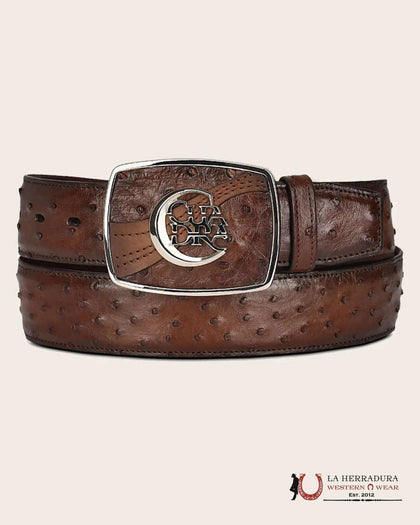
Men's Exotic Leather Belts
Finding a real exotic belt is harder than it should be. Most listings online show embossed cowhide printed to look like ostrich or caiman. You pay exotic prices and receive stamped leather. La Herradura Western Wear stocks 194 genuine hide belts, led by Cuadra, with caiman, ostrich, python, stingray and elephant in stock from $45 to $470. Shop the full range below, or try one on at our Selma NC store.
Why Most "Exotic" Belts Online Are Not Exotic at All
Walk through any marketplace listing and you will see the same pattern. Sellers list ostrich quill belts for $34. Read the fine print and many disclose the hide is printed, not real.
That gap costs buyers twice. You lose money, and you lose the look. Printed leather flattens after six months. Genuine quill does not.
Real exotic skin behaves differently from stamped grain. Ostrich quill sits raised and catches light. Caiman scales shift tone as you move. Python back shows irregular scale spacing no press can copy.
Every belt in this men's exotic leather belts collection is a genuine hide. We name the skin, the cut and the finish on each product. No guessing, no stamped substitutes.
Browse the full exotic belts for men range above, or keep reading to learn which hide fits your style.
Exotic Skins in This Collection
Each hide carries a different texture, price and personality. Here is what we stock and what each one does well.
Caiman: Fuscus, Moreleti, Belly and Back
Caiman belts deliver the boldest scale pattern in western wear. We stock Caiman crocodilus fuscus and Moreleti hides across belly, lomo and complete cuts.
Belly cuts show soft, even square scales. Lomo and back cuts show raised bony ridges with heavy texture. Complete belts combine both across one strap.
Prices run $199 to $470. Caiman suits dress boots, bailes and weddings. It holds shape for years with light conditioning.
Full-Quill Ostrich and Ostrich Leg
Ostrich, or avestruz, is the most recognizable exotic hide in the western market. Full-quill shows the raised follicle bumps across the entire strap.
The leather stays soft and flexible from day one. It never develops the stiff break line cheaper belts get at the buckle.
We carry black, chestnut, grey toki, honey and flame orix finishes. Most sit between $154 and $320. Ostrich pairs naturally with full-quill ostrich boots.
Python: Back, Belly and Nubuck Finishes
Python, or pitón, gives you pattern without weight. Back cuts show the wide diamond scale run. Belly cuts show finer, tighter banding.
Nubuck-finished python adds a matte, brushed surface that tones down shine. That works well for daily wear and office settings.
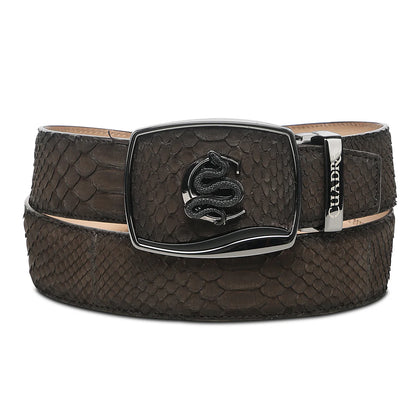
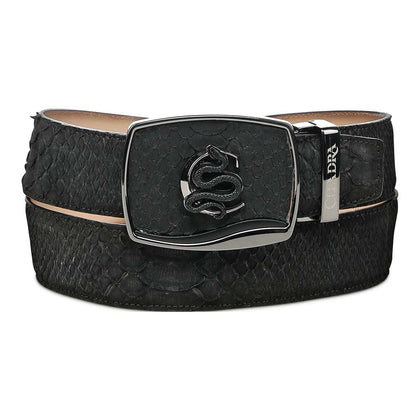
Python belts here run $169 to $200. The natural, brown and black finishes move fastest.
Stingray (Mantarraya)
Stingray is the toughest hide on this page. The surface is covered in calcified beads that resist scuffing almost completely.
Black mantarraya is the signature look. Woven stingray versions add texture across the strap face.
Expect $194 to $220. Choose stingray if you want one belt that survives hard, constant use.
Elephant, Teju Lizard and Deer
Elephant hide shows a deep, open grain with visible wrinkle lines. It reads rugged rather than formal. Laser and woven versions add detail.
Teju lizard gives a small, uniform scale pattern. It stays subtle under a jacket while still reading exotic up close.
Deer leather is the softest option here. It breaks in fast and feels almost like glove leather.
Arapaima (Pirarucu) Fish Leather
Arapaima is the rarest hide we carry. This Amazonian fish produces large, overlapping round scales unlike any reptile skin.
The texture resembles armor plating. Chocolate is the standout finish at $299.
Few US retailers stock arapaima belts. If you want something no one else at the event is wearing, this is it.
Bovine and Sillero Saddle Leather
Not every buyer wants exotic. Our res and sillero belts use heavy bovine hide in crust maple, castaño, negro and anna grey.
Sillero is saddle-grade leather. It is thick, structured and built for ranch work rather than dress wear.
These start at $134. Many feature laser-cut and woven detailing across the strap.
Found your hide? Add it to cart above, or compare it against our leather belts collection.
How Do I Choose the Right Belt Size?
Order your belt two inches larger than your pant waist. If you wear 34 pants, order a 36 belt. This places the buckle prong in the center hole and leaves room on both sides. Our exotic belts run sizes 32 to 44 and have five holes spaced one inch apart.
Belt Size vs. Pant Waist
Belt sizing confuses more buyers than any other detail. Belt numbers are not pant numbers.
Measure through the belt loops of pants you already wear. Take that number from buckle prong to the hole you use. That measurement is your belt size.
If you sit between two sizes, order up. The extra hole gives you room as layers change through the seasons.
Sizes 32 to 44 Explained
Most Cuadra belts in this collection run 38mm wide, roughly 1 ⅜ inches. That width fits standard western jean loops and dress trousers.
Sizes 32 through 44 cover the majority of buyers. Not every hide stocks every size, so check the size selector on each product.
Still unsure? Visit our Selma NC or Columbia SC store. Our staff will measure you in person.
How Do I Match a Belt to My Cowboy Boots?
Match the hide first, then the tone. Pairing an ostrich belt with ostrich boots creates the cleanest western look. If exact hide matching is not possible, keep leather tones within one shade of each other. Black belts pair with black boots. Brown, honey and chestnut tones work together without needing an exact match.
Same-Hide Pairing
Same-hide pairing is the strongest look in western dress. A caiman belt with caiman boots signals intent, not accident.
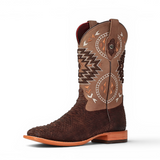
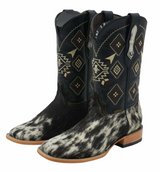
La Herradura carries Cuadra boots and Cuadra belts in matching hides. That makes exact pairing realistic here in a way most retailers cannot offer.
Shop the hide you want on the belt, then check the same skin in our Cuadra boots range.
Contrast Pairing for Dress and Rodeo Wear
Contrast works when the tones stay related. Chocolate ostrich over black boots reads intentional. Grey caiman over tan boots does not.
For rodeo and ranch wear, bovine and sillero belts take abuse better than exotic hides.
For bailes, quinceañeras and weddings, go exotic. The light catches the texture across the room.
Build the full set. Pair your belt with a Cuadra wallet in the same hide.
Is Printed Leather the Same as Genuine Exotic Skin?
No. Printed leather is cowhide stamped with an exotic pattern under heat and pressure. Genuine exotic skin comes from the actual animal hide and carries natural variation in scale size, color and grain. Printed belts cost $30 to $50. Genuine exotic belts start near $150. Every exotic belt at La Herradura Western Wear is a real hide.
Here is how to tell them apart yourself.
Pattern repeat. Printed leather repeats the same scale shape. Real hide never repeats exactly.
Edge view. Genuine skin shows the hide layer at the cut edge. Printed leather shows uniform cowhide.
Texture depth. Real quills and scales are raised. Stamped texture sits flat under your thumb.
Price honesty. A $35 ostrich belt is not ostrich.
Natural variation is proof, not a flaw. Color, grain and scale pattern shift between pieces. No two caiman belts look identical.
Our exotic hides are sourced through CITES-regulated supply channels. Buying and wearing them in the United States is fully legal.
How Do I Care for an Exotic Leather Belt?
Wipe the belt with a dry cloth after each wear. Apply a conditioner made for exotic hides every three to four months. Store belts hanging or lying flat, never rolled. Rolling creates stress lines that crack scales over time. Keep exotic leather away from direct heat, standing water and harsh solvents.
A few habits add years to a belt.
Rotate between two belts rather than wearing one daily.
Let a wet belt air dry at room temperature, never near a heater.
Condition ostrich and caiman more often than bovine.
Take deep scratches to a leather professional instead of buffing them yourself.
Treated this way, a quality exotic belt outlives most of the wardrobe around it. That is why the price makes sense over a decade, not a season.
Shop Exotic Belts In Store or Online
La Herradura Western Wear has served western shoppers across the Carolinas for years. Our buyers select every hide in this collection by hand.
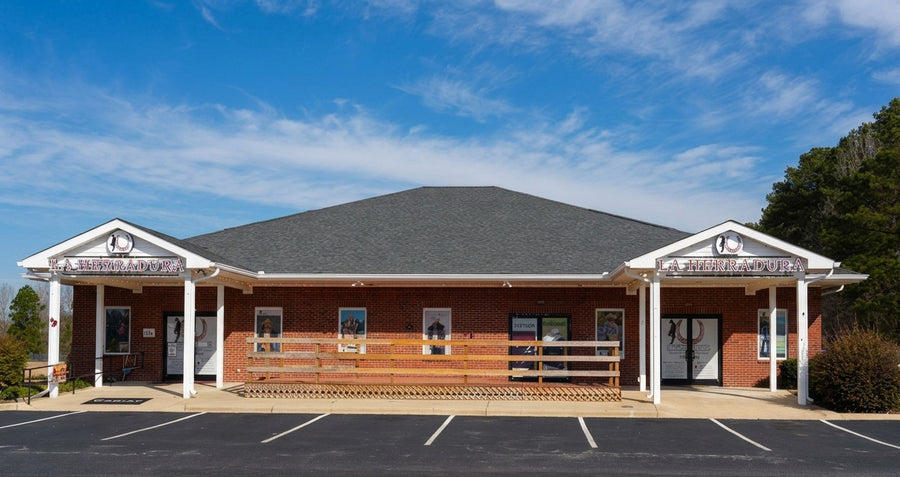
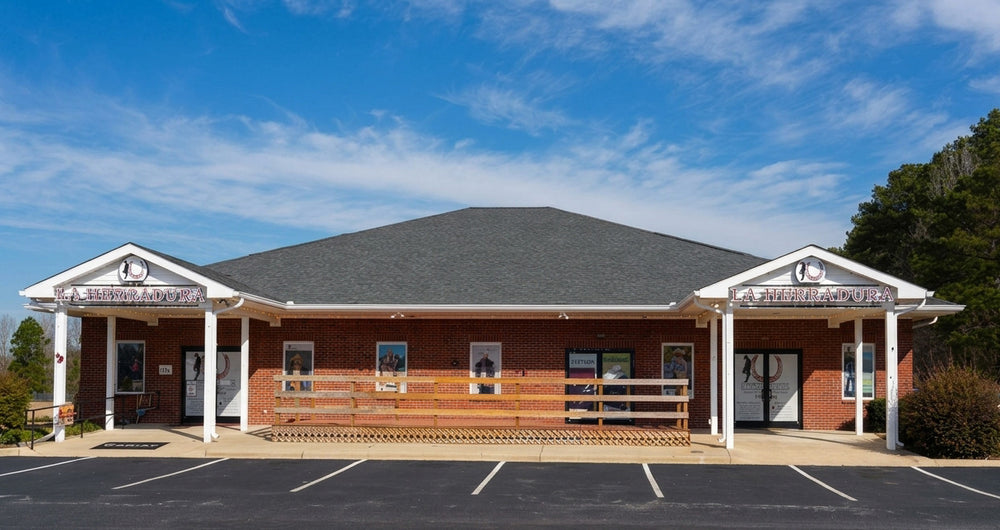
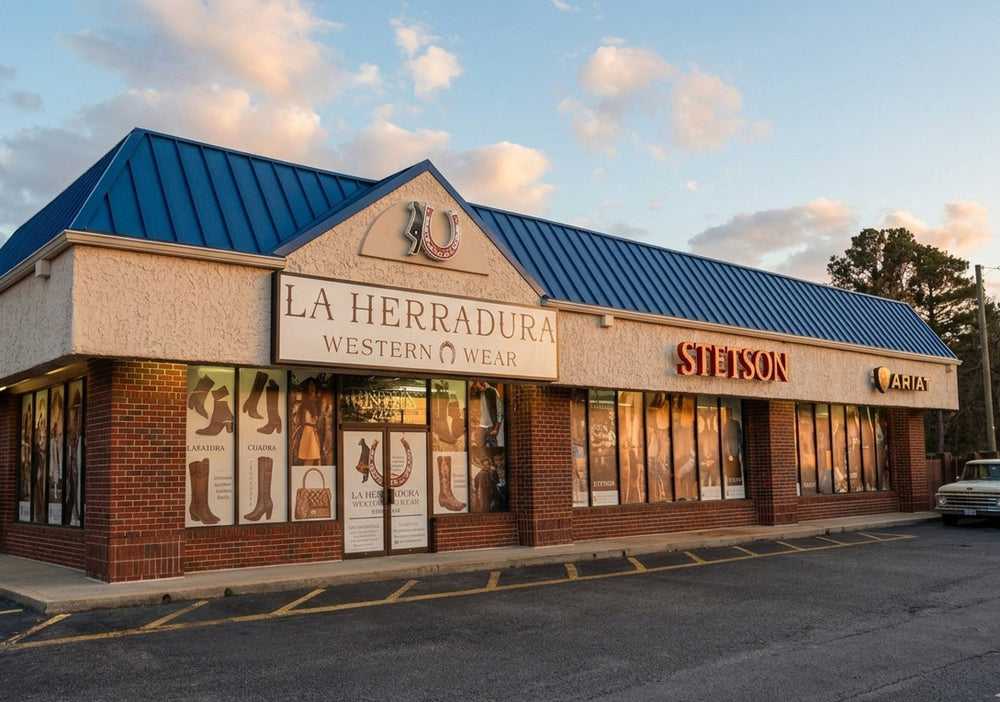
Visit our Selma NC store at 171 Meghan Circle, open Monday through Thursday 10am to 8pm and Friday through Sunday 9am to 9pm. Call (919) 351-0295.
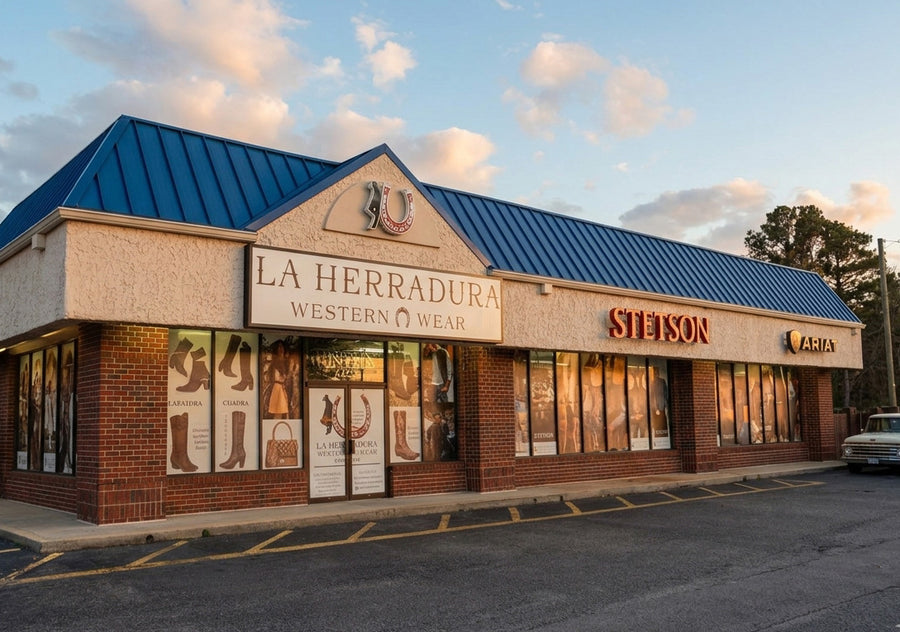
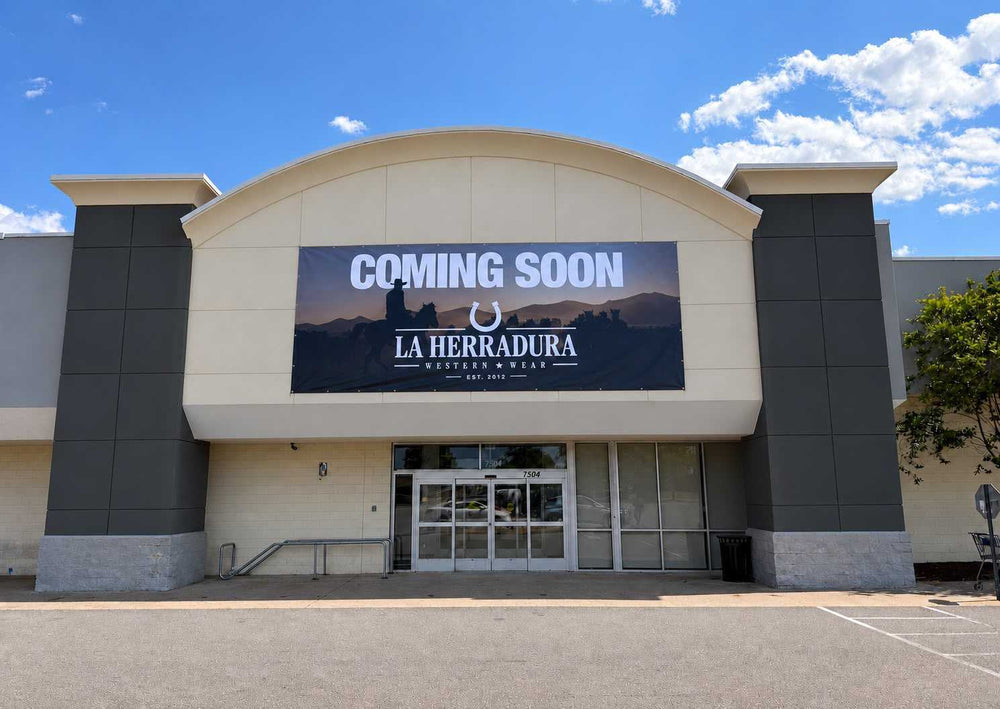
Our Columbia SC store sits at 7380 Two Notch Rd, open Monday through Thursday 10am to 8pm and Friday through Sunday 9am to 8pm. Call (910) 596-7393.
Try belts against your own boots in person. Our staff knows the difference between fuscus and Moreleti, and will tell you honestly which suits you.
Prefer to order online? Shipping is free on orders over $200. Most exotic belts in this collection clear that threshold on their own.
Choose your hide above and order today. Your belt ships free over $200.
Frequently Asked Questions
What is caiman fuscus leather?
Caiman fuscus comes from Caiman crocodilus fuscus, a small South American crocodilian. The hide shows tight, square belly scales and raised bony ridges along the back. It is more affordable than American alligator while delivering similar texture and durability. Fuscus belts at La Herradura run $199 to $374 depending on cut and finish.
Is ostrich print the same as real ostrich?
No. Ostrich print is cowhide embossed with a quill pattern. Real ostrich has raised follicle bumps you can feel with your thumb, plus natural spacing that never repeats. Real full-quill ostrich belts start near $154. Printed versions sell for $35. All ostrich belts here are genuine hide.
What belt size should I order?
Order two inches above your pant waist size. A 36 pant takes a 38 belt. Our belts run sizes 32 to 44 with five holes spaced one inch apart. If you fall between sizes, size up. Visit our Selma NC or Columbia SC store for an in-person fitting.
Can I change the buckle on these belts?
Yes. Most Cuadra and exotic belts in this collection use a removable snap buckle. You can swap buckles in seconds without tools. That lets one strap work for ranch days and dress events. Browse our western belt buckles and Montana silver options to build your own combinations.
How do I stop an exotic belt from cracking?
Never roll it. Hang the belt or lay it flat. Condition every three to four months with a product made for exotic hides. Keep it away from heat vents, car dashboards and direct sun. Rotate between belts so one strap is not flexing at the same point every day.
Are exotic leather belts legal to buy in the United States?
Yes. Caiman, python, ostrich, stingray and elephant hides are legally traded under CITES regulation. Licensed tanneries and manufacturers like Cuadra source through permitted channels. Buying, owning and wearing these belts in the United States is fully legal. Interstate shipping within the US requires no additional permits from the buyer.
Related Collections
Men's belts
Leather belts
Western belt buckles
Montana silver buckles
Cuadra boots
Cuadra wallets
Men's wallets