

Tipos de tacón en botas vaqueras explicados | Tacones Roper, Walking y Riding
El tacón de una bota vaquera afecta mucho más que la apariencia. La altura, el ángulo y la forma del tacón pueden cambiar la sensación de estabilidad al caminar, la naturalidad con la que funciona en el estribo y si es más adecuado para el trabajo en el rancho, el uso diario o para ocasiones vaqueras más elegantes.
Si está decidiendo entre un tacón bajo tipo «roper», un tacón para caminar o el tradicional tacón vaquero inclinado, comience por cómo planea usar las botas.
Respuesta rápida: Los tacones más bajos y anchos son generalmente más fáciles para caminar y estar de pie, mientras que los tacones vaqueros más altos e inclinados son tradicionalmente más adecuados para montar y crean un perfil vaquero más clásico. Ariat describe un tacón vaquero tradicional como inclinado y de aproximadamente una a dos pulgadas de alto, mientras que un tacón roper es más bajo y nivelado.
¿Cuáles son los principales tipos de tacón en las botas vaqueras?
Los estilos de tacón vaquero más comunes incluyen:
- Tacón roper
- Tacón para caminar
- Tacón stockman
- Tacón vaquero tradicional
- Tacón de montar
- Tacón de vestir o de moda
Los nombres de los tacones pueden variar ligeramente entre las marcas de botas, así que revise siempre la altura y el perfil del tacón indicados para un par específico.
Tacón Roper
El tacón roper es uno de los estilos de tacón más bajos y estables que se encuentran en las botas vaqueras.
Las botas roper se desarrollaron para los lazos de becerros que necesitaban un calzado que funcionara tanto en la silla de montar como después de desmontar rápidamente. Los tacones roper modernos suelen ser cortos, anchos y relativamente nivelados en comparación con el tacón más inclinado de una bota vaquera tradicional.
¿Para qué son mejores los tacones roper?
Los tacones roper son una excelente opción para:
- Caminar
- Trabajo en el rancho
- Largos periodos de pie
- Uso diario de estilo vaquero
- Personas que compran sus primeras botas vaqueras
- Clientes que prefieren un tacón más bajo y estable
Debido a que el tacón se asienta más cerca del suelo, muchos compradores encuentran que las botas roper son más fáciles de usar si normalmente usan zapatos casuales o botas de trabajo.
Tacón para caminar
Un tacón para caminar está diseñado para dar a la bota vaquera una sensación estable y cómoda durante largos periodos a pie.
Los tacones para caminar suelen tener una base ancha y menos inclinación que los tacones de montar más altos. Dependiendo del fabricante, el término puede solaparse con los diseños de tacón roper o stockman.
Boot Barn señala que los tacones para caminar miden comúnmente entre 1 y 1.5 pulgadas y están diseñados para distribuir el peso de manera más uniforme al caminar y estar de pie.
¿Quién debería elegir un tacón para caminar?
Considere un tacón para caminar si pasa mucho tiempo:
- Caminando en el trabajo
- De pie en eventos vaqueros
- De compras o viajando
- Trabajando en un rancho
- Asistiendo a festivales o conciertos
- Usando botas vaqueras como calzado diario
Un tacón para caminar es especialmente útil cuando la apariencia vaquera importa, pero el máximo rendimiento al montar no es la prioridad principal.
Tacón Stockman
El tacón stockman se sitúa entre un tacón roper bajo y un tacón vaquero tradicional más alto.
Normalmente tiene una base más ancha que un tacón vaquero clásico, lo que proporciona al usuario mayor estabilidad mientras conserva gran parte de la postura tradicional de la bota vaquera.
Los tacones estilo stockman suelen rondar las 1.5 pulgadas, aunque las medidas varían según la bota.
¿Para qué es bueno un tacón stockman?
Un tacón stockman es una opción versátil para:
- Trabajo en el rancho
- Caminar
- Estar de pie durante largos periodos
- Montar ligeramente
- Uso vaquero casual
- Personas que quieren una bota para múltiples usos
Si desea una bota que siga luciendo inequívocamente vaquera pero que se sienta menos agresiva que un tacón de montar alto, un perfil stockman puede ser un buen punto medio.
Tacón vaquero tradicional
El tacón vaquero tradicional es más alto y más inclinado que un tacón roper o de caminar.
Ese perfil inclinado fue desarrollado pensando en montar a caballo. El tacón ayuda a mantener la bota posicionada en el estribo mientras mantiene la silueta reconocible asociada con las botas vaqueras clásicas.
¿Para qué son mejores los tacones vaqueros?
Los tacones vaqueros tradicionales funcionan especialmente bien para:
- Montar a caballo
- Rodeos
- Eventos vaqueros
- Atuendos vaqueros de vestir
- Estilo vaquero tradicional
Todavía se pueden usar de forma casual, pero alguien que pasa la mayor parte del día caminando sobre concreto puede preferir un tacón más bajo.
Tacón de montar
Un tacón de montar generalmente tiene un ángulo más alto y pronunciado que un tacón enfocado en caminar.
Justin Boots explica que las botas de montar tradicionalmente usan un tacón más alto e inclinado para ayudar a mantener al jinete seguro en la silla.
¿Es bueno un tacón de montar para caminar?
Absolutamente puede caminar con tacones de montar, pero normalmente no son la primera opción para clientes cuya prioridad principal es recorrer largas distancias a pie.
Para largas jornadas de trabajo, viajes o caminar regularmente, un tacón roper, stockman o para caminar más bajo puede sentirse más natural.
Tacones de vestir y de moda
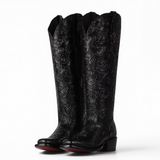
Las botas vaqueras para mujer y las botas vaqueras orientadas al vestir pueden usar tacones más altos o con formas más definidas principalmente por su apariencia.
Estos estilos de tacón a menudo se combinan con:
- Puntas estilo "snip" (cortadas)
- Puntas puntiagudas
- Puntas estilo "cutter"
- Cañas decorativas
- Bordados
- Acabados metálicos
- Texturas exóticas
Se eligen comúnmente para bodas, bailes, conciertos country y otras ocasiones especiales donde la silueta y el estilo importan tanto como la función.
Tacón vaquero vs. Tacón roper
La diferencia principal es la altura, el ángulo y el uso previsto.
| Característica | Tacón vaquero | Tacón roper |
|---|---|---|
| Altura | Generalmente más alto | Más bajo |
| Perfil trasero | Más inclinado | Más recto |
| Caminar | Bueno | Excelente |
| Montar | Excelente | Bueno |
| Estabilidad | Moderada | Alta |
| Aspecto general | Vaquero clásico | Vaquero práctico |
| Mejor uso | Montar y estilo tradicional | Caminar, trabajo en rancho y uso diario |
Ariat distingue de manera similar las botas vaqueras tradicionales por su tacón inclinado más alto y las botas roper por su tacón más corto y cuadrado.
¿Qué tacón de bota vaquera es más cómodo?
No hay un solo tacón que sea el más cómodo para todos.
Para clientes que pasan la mayor parte del día caminando o de pie, los tacones roper, para caminar y stockman son generalmente el punto de partida más fácil porque son más bajos y tienen una base más ancha.
La comodidad también depende de:
- Talla de bota adecuada
- Ajuste en el empeine
- Ancho
- Forma de la punta
- Amortiguación de la plantilla
- Flexibilidad de la suela
- Soporte del arco
- Cuánto tiempo use las botas
Un tacón más bajo no puede compensar una bota que no ajusta bien.
Para obtener más ayuda con las tallas, lea nuestra Guía de ajuste de botas vaqueras y nuestra Guía de formas de punta de botas vaqueras antes de elegir su próximo par.
¿Qué tacón es mejor para caminar?
Para caminar regularmente, busque un:
Tacón roper, tacón para caminar o tacón stockman bajo.
Estas formas de tacón generalmente mantienen el pie más cerca de una posición natural al estar de pie y ofrecen un área de contacto más amplia con el suelo.
Las botas diseñadas específicamente para caminar largas distancias también pueden incluir plantillas acolchadas y suelas de goma flexibles.
¿Qué tacón es mejor para montar?
Los tacones vaqueros tradicionales y de montar están diseñados específicamente para el uso a caballo.
Sus perfiles más altos e inclinados ayudan a posicionar el pie en el estribo.
También se puede montar con botas roper, pero los jinetes que pasan mucho tiempo en la silla pueden preferir un perfil de montar más tradicional según su disciplina y configuración de los estribos.
¿Qué tacón de bota vaquera es mejor para el trabajo en el rancho?
Para el trabajo en el rancho que implica una mezcla de montar, caminar y trabajar en el suelo, un tacón estilo roper o stockman ofrece un buen equilibrio.
Las botas roper se desarrollaron específicamente en torno a esta combinación de uso en silla y movimiento a pie.
Si el entorno de trabajo incluye barro, concreto o superficies resbaladizas, la tracción de la suela y la amortiguación deben considerarse junto con la forma del tacón.
¿Qué tacón es mejor para bodas o eventos formales?
Para bodas y eventos vaqueros más elegantes, los tacones vaqueros tradicionales y los tacones de vestir generalmente crean una silueta más estilizada que los tacones bajos orientados al trabajo.
Combínelos con:
- Botas de punta "snip"
- Botas de punta "cutter"
- Botas de punta puntiaguda
- Botas de punta redonda pulidas
- Botas vaqueras exóticas
- Acabados de cuero limpio
Una bota vaquera tradicional pulida puede combinar bien con trajes, mezclilla de vestir y atuendos vaqueros formales.
¿La altura del tacón afecta el ajuste de la bota vaquera?
La altura del tacón cambia el ángulo de su pie, pero el ajuste adecuado de la bota vaquera depende principalmente de:
- Seguridad en el empeine
- Colocación de la bola del pie
- Ancho correcto
- Espacio para los dedos
- Movimiento controlado del talón
Las botas vaqueras nuevas de meter normalmente permiten una pequeña cantidad de movimiento en el talón durante el proceso de adaptación.
Si no está seguro sobre la talla, utilice nuestra guía ¿Cómo deben ajustar las botas vaqueras? antes de cambiar de talla simplemente porque un tacón se siente extraño.
Comparación rápida de tacones de botas vaqueras
| Tipo de tacón | Mejor para | Comodidad al caminar | Uso al montar | Look vaquero |
|---|---|---|---|---|
| Roper | Uso diario, trabajo en rancho | Excelente | Bueno | Clásico |
| Caminar | Caminar y estar de pie | Excelente | Moderado | Vaquero casual |
| Stockman | Uso diario mixto | Muy bueno | Bueno | Tradicional |
| Vaquero | Montar y estilo vaquero | Bueno | Excelente | Muy tradicional |
| Montar | Uso en silla | Moderado | Excelente | Tradicional |
| Vestir/Moda | Eventos y estilo | Varía | Bajo a moderado | Refinado |
Cómo elegir el tacón de bota vaquera adecuado
Comience por su uso real.
Elija un tacón roper o para caminar cuando pase la mayor parte del día a pie.
Elija un tacón stockman cuando desee una mezcla versátil de estabilidad y estilo vaquero.
Elija un tacón vaquero tradicional o de montar cuando el rendimiento al montar y una auténtica silueta vaquera sean lo más importante.
Elija un tacón de vestir cuando la bota se compre principalmente para bodas, bailes o eventos vaqueros.
La mejor bota vaquera no es simplemente la que tiene el tacón más alto o más bajo. Es aquella cuyo tacón, punta, ajuste y construcción coinciden con la forma en que realmente planea usarla.
Preguntas frecuentes
¿Cuál es el tacón de bota vaquera más fácil para caminar?
Un tacón roper o para caminar más bajo es generalmente una de las opciones más fáciles para caminar largas distancias debido a su menor altura y base más amplia.
¿Cuál es la diferencia entre un tacón roper y un tacón vaquero?
Los tacones roper son más bajos y rectos, mientras que los tacones vaqueros tradicionales son más altos y están más inclinados hacia atrás.
¿Se supone que los tacones vaqueros deben estar inclinados?
Los tacones vaqueros tradicionales orientados a montar comúnmente tienen una inclinación o ángulo notable. Los tacones más bajos para caminar y los roper suelen ser más rectos.
¿Son mejores los tacones vaqueros más altos?
No automáticamente. Los tacones más altos son útiles para aplicaciones tradicionales de equitación y crean un perfil vaquero clásico, mientras que los tacones más bajos a menudo son más fáciles para caminar y usar a diario.
¿Se pueden usar tacones de montar todos los días?
Sí, si le ajustan cómodamente. Sin embargo, los clientes que pasan largos periodos caminando o de pie pueden preferir un tacón para caminar o roper más bajo.
¿Qué tacón debería elegir un comprador de botas vaqueras por primera vez?
Un tacón roper, para caminar o un stockman moderado es a menudo un punto de partida cómodo porque proporciona estabilidad mientras mantiene el estilo vaquero.
