



How Should Cowboy Boots Fit? The Complete Sizing Guide
How Should Cowboy Boots Fit? The Complete Sizing Guide
Quick answer: A cowboy boot should fit snugly across the instep and arch, hold your heel with about ¼ inch of slip on new boots, and leave roughly ½ inch of room at the toe so you can wiggle your toes freely. Boots tend to run slightly large, so many people wear a boot size a half-size smaller than their sneaker size. Because there are no laces to adjust, the fit has to be right from the first try on the leather will stretch in width, not length, as it molds to your foot.
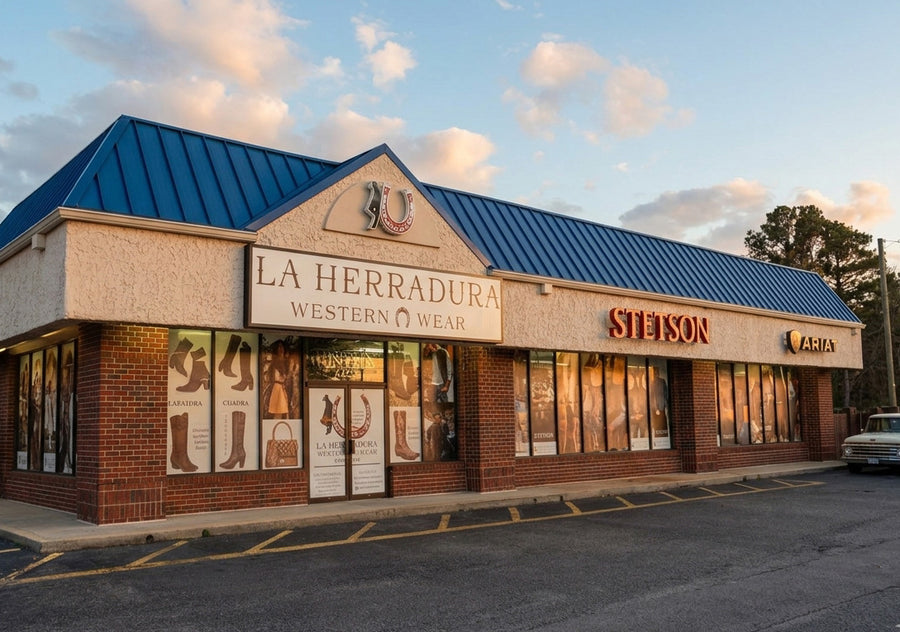
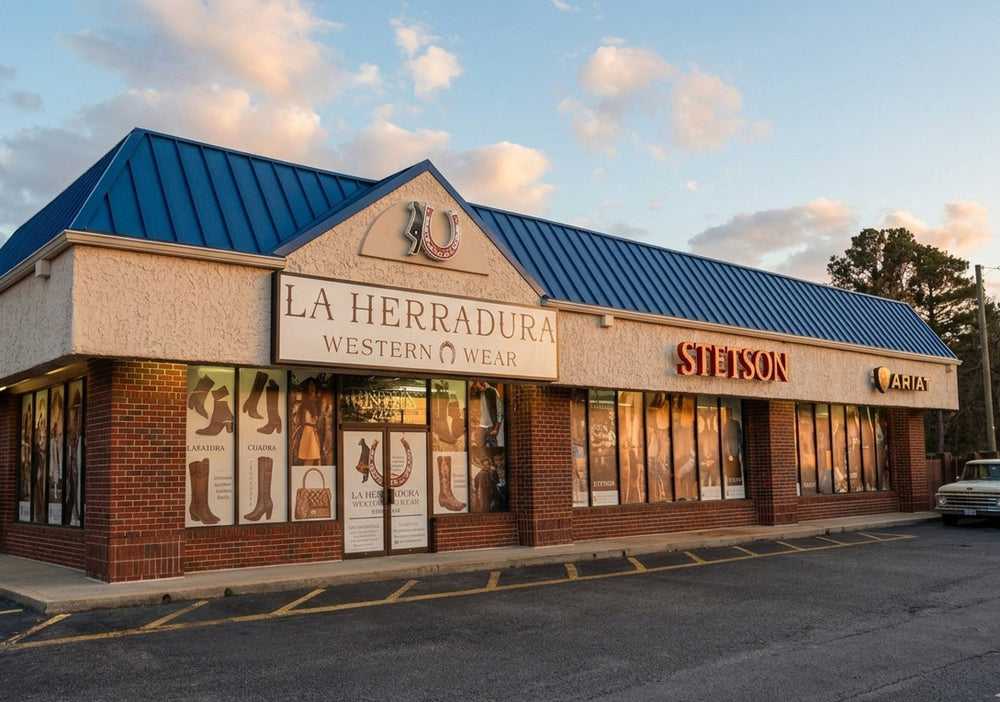
At La Herradura Western Wear, we've been fitting boots in person for years at our stores in Selma, NC and Columbia, SC. This guide walks through exactly how a cowboy boot is supposed to feel, why fit changes from brand to brand, and how to avoid the most common sizing mistakes when you buy online.
Why cowboy boots fit differently than any other shoe
Cowboy boots aren't fitted like sneakers, dress shoes, or hiking boots — and treating them the same way is why so many first pairs end up returned.
Three things make them unique:
- No laces or straps. A sneaker cinches down over the top of your foot. A cowboy boot can't. The entire boot has to be held on by the shape of the leather around your instep and heel. That's why instep fit — not toe room — is the make-or-break point.
- A pull-on design. You need a little resistance and a "pop" as your foot drops into place. A boot you can slide into effortlessly is almost always too big.
- Leather that molds to you. Over the first few weeks, the vamp (the leather over the top of your foot) softens and forms to your foot, and early heel slip disappears. You're buying a boot that changes as you wear it.
Keep those three facts in mind and the rest of this guide makes sense.
What size cowboy boot should I buy?
Start with your regular shoe size, then adjust:
- Men: Order the size you wear in dress shoes. Cowboy boots often run about a half-size large, so if you're between sizes, size down for a snug fit.
- Women: Order the size you wear in heels or flats. If you're between sizes, most brands recommend sizing down a half.
- Everyone: Confirm your width, not just your length. A boot that's the right length but wrong width will never feel right, and no amount of break-in fixes it.
One overlooked point: your feet change over time. They widen and lengthen with age and weight, so the size you wore ten years ago may not be your size today. It's worth re-checking every few years.
Understanding boot width (B, D, EE and more)
Width is measured on a letter scale, and the further you move from "A," the wider the boot.
- Men's widths typically run B (narrow), D (standard/medium), and EE (wide).
- Women's widths typically run A (narrow), B (medium), and C (wide) — though this varies by brand and last.
How to check your width: stand up, look straight down at your foot in the boot. You should just be able to see the welt stitching on the outsole on both sides. If the leather bulges over the sole and you can't see the stitching, you likely need a wider width. If there's a loose, sloppy wrinkle across the instep, you may need a narrower one.
Getting width wrong causes real problems — too narrow pinches and can weaken the leather; too wide lets the foot slide, which wears the boot unevenly and causes heel slip that never settles.
The 5 fit checkpoints
When you put a boot on, check these five points in order. This is the same walkthrough we use on the sales floor.
1. The ball of your foot. The widest part of your foot should sit at the widest part of the boot's sole — the spot where the boot naturally bends when you step. If it lands too far forward or too far back, the size is wrong. This is the single most important fit point, so start here.
2. Instep (top of the foot). Because there are no laces, the instep is what actually holds the boot on. As you pull the boot on, you should feel firm resistance and then a slight "pop" as your foot seats. Snug is correct. If your foot slides in with no resistance, the boot is too big. If there's painful pressure across the top, you either need a larger size or a wider width.
3. Heel slip. About ¼ inch of heel movement on brand-new boots is normal — and it's not a sign the boot is too big. New soles are stiff and don't flex yet, which lifts the heel slightly. As you break the boot in and the sole flexes, the slip decreases and often disappears. Don't size down just to eliminate it, or you'll end up cramped once the boot molds.
4. Toe room. Aim for about ½ inch between your longest toe and the tip of the boot, with enough space to wiggle your toes freely. Never press down on the toe box to test room the way you would with sneakers. The reinforced toe box can be permanently dented that way. Wiggle your toes instead — if they move comfortably and aren't touching the end, you're good.
5. Calf and shaft. The shaft should feel comfortable around your calf without pinching, and your ankle shouldn't have excessive room. Roughly 1–2 inches of space around the calf works for most people. If the shaft is too tight to pull on, a wider-shaft style or a shorter-shaft boot (like a roper) may suit you better.
Cowboy boots fit differently by brand — this is the #1 mistake
A size 9 in one brand is not a size 9 in another. This trips up more online buyers than anything else. General guidance from major makers:
- Ariat — Generally true to size. If you're between sizes, size down for a snug fit. Known for athletic, comfort-focused construction.
- Cuadra — Handcrafted in León, Mexico. Fit can run narrow, especially in exotic-leather styles. Many customers size up a half-size — try in person when you can.
- Justin — A Justin size 9 fits differently than other brands at the same number, and a Justin roper fits differently than a Justin pointed-toe style.
- Tony Lama — Runs differently from Justin even though they share a parent company; always check the specific last.
- Lucchese — Built on a proprietary "twisted cone" last that doesn't suit every foot. Tends to run true to size, but the last shape is distinctive.
Because the variation is this large, trying boots on in person is always the safest route. If you're near Selma, NC or Columbia, SC, our staff will size you across Ariat, Cuadra, Justin, Tony Lama, and more in a few minutes.
Does toe shape affect fit?
This is a common worry, especially for people with wider feet who assume a pointed toe will squeeze their toes. The answer: toe shape is supposed to have no effect on fit.
A well-made boot's fit is determined behind the toe — at the ball, instep, and heel. The toe is then shaped for style, with bootmakers adding extra length inside a pointed or snip toe so your toes never actually reach the narrow point. Your toes should sit back in the roomy part of the boot regardless of the silhouette.
That said, toe shape does affect feel and purpose, so it's worth choosing with your use in mind:
- Round / R-toe (classic): Roomy, comfortable, great all-day and for riding. The most traditional, versatile choice and a solid first pair.
- Roper (round): A rounder, slightly wider toe on a shorter-shaft boot — built for working and long walking.
- Pointed / J-toe: The timeless dressy cowboy look. Sleek with jeans or slacks; extra room is built in past the point.
- Snip toe (D-toe): A pointed toe with the tip squared off — a modern, dressier look popular for going out and western events.
- Square toe: Boxy, roomy toe box that lets toes spread — a favorite for people on their feet all day.
- Broad / wide square: An even wider square toe, ideal for wide feet and long work days (can be bulky in a stirrup).
- Cutter: A narrower, tapered square — slides into stirrups easily while giving more room than a point. Popular with rodeo and cutting-horse riders.
If two toe shapes feel different in the same size at the same brand, that's usually the last, not the toe itself — try the other size.
How the boot changes as it breaks in
A new boot and a broken-in boot are almost two different boots. Here's what actually shifts:
- The vamp (leather over the top of your foot) stretches roughly a quarter size and molds to your foot's shape.
- The toe box is reinforced and barely stretches. If your toes are cramped out of the box, size up a half — don't count on it giving.
- Heel slip decreases as the sole flexes and the boot conforms to you.
- Minor hotspots at the edge of the toe box are normal in the first wears and typically fade as the leather softens.
The rule to remember: leather gives in width, not in length. A boot that's too short will always be too short, no matter how long you wear it. Buy the correct length from day one.
How to put cowboy boots on (yes, there's a right way)
Putting boots on wrong is a common reason people wrongly decide a well-fitting boot "doesn't work":
- Sit down and loop your fingers through the pull straps (or grip the sides of the shaft).
- Point your toes and start your foot into the shaft.
- As your foot reaches the turn into the foot of the boot, stand up to use your body weight, and push down until you feel the heel pop into place.
If a correctly sized boot won't go on, it's usually technique — not fit.
Fitting tips that make a real difference
- Wear the socks you'll actually wear. Boot-sock thickness changes fit noticeably. If you'll wear thick socks, fit in thick socks. First pair? Grab proper boot socks or tall athletic socks.
- Try boots on in the afternoon. Feet swell over the course of the day and are at their widest later on — that's the fit you want to buy for.
- Always stand and walk. Some boots are built to grip the arch and only feel right under body weight. Put both on, stand up, and take a lap.
- Buy for the larger foot. Most people have two slightly different feet. Fit the bigger one, then snug up the other side with a thin insole if needed.
- High arch or high instep? Sizing up a half (or, for men, sometimes a full size) can relieve instep pressure. Ask about wider widths too.
Signs a cowboy boot does NOT fit
Return or resize if you notice:
- Your foot slides in with no resistance or "pop" (too big).
- Painful pressure across the instep that doesn't ease (too tight or too narrow).
- Your toes touch or press the end of the toe box (too short — size up).
- The ball of your foot sits ahead of or behind the boot's widest point (wrong size).
- A large loose wrinkle across the instep leather (too loose — narrower width).
- Heel slip so severe your heel lifts completely out while walking (too big or too wide).
A little heel slip on new boots is fine. Pain anywhere, or your toes hitting the end, is not — and it won't "break in" away.
Frequently Asked Questions
Should cowboy boots be tight or loose?
Snug across the instep and arch, never loose. The instep is what holds a laceless boot on, so it should feel firm. Your toes, meanwhile, should have room to wiggle. A loose instep leads to slipping and uneven wear.
Is heel slip normal in cowboy boots?
Yes. About ¼ inch of heel slip on new boots is normal and expected, because the stiff new sole hasn't flexed yet. It decreases as you break the boots in. Don't size down just to remove it.
Do cowboy boots run big or small?
Slightly big. Many people wear a boot about a half-size smaller than their sneaker size. Always confirm width as well as length, and check the specific brand's guidance since sizing varies.
How much toe room should cowboy boots have?
About ½ inch between your longest toe and the tip, with room to wiggle your toes. Don't press the toe box to check — the reinforced toe can be permanently damaged. Wiggle instead.
Will cowboy boots stretch?
They stretch in width, not in length. The vamp gives about a quarter size and molds to your foot; the reinforced toe box barely moves. Buy the correct length from the start.
How should cowboy boots fit in the calf?
The shaft should sit comfortably with roughly 1–2 inches of room around your calf — snug enough to stay up, loose enough to walk and pull on easily. Wide calves may prefer a wider shaft or a shorter roper-style boot.
Does toe shape change how a boot fits?
It shouldn't. Fit is set at the ball, instep, and heel; the toe is shaped for style, with extra room built in past pointed or snip toes. Toe shape affects look and purpose, not sizing.
Can I fix a cowboy boot that's slightly too tight?
Minor width tightness can improve as the vamp stretches, and a bootmaker can stretch the shaft or width slightly (about an inch max). But length can't be added, and an over-stretched boot loses structure — so start with the right size.
Ready to find your perfect fit? Visit La Herradura Western Wear in Selma, NC or Columbia, SC, and our team will size you across Ariat, Cuadra, Justin, Tony Lama, and more — or shop cowboy boots online with these tips in hand.
