





Wide Calf Cowboy Boots for Women: How to Measure, Fit & Choose the Right Pair
Finding wide calf cowboy boots for women can be frustrating when a boot fits perfectly around your foot but feels too tight around your leg. The good news is that you don't necessarily need a larger shoe size. You need a boot with the right combination of calf circumference, shaft height, opening shape, and foot fit.
The best wide-calf cowboy boots provide enough room around your calf without squeezing your leg, restricting movement, or creating excessive gaps. Some western boots are specifically designed with wider shafts, while others use stretch panels, flexible materials, or shorter silhouettes to accommodate different leg shapes.
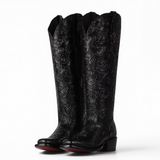
Whether you're shopping for everyday western boots, embroidered cowgirl boots, or a pair for concerts and special occasions, this guide explains how to measure your calves, understand boot specifications, and choose a comfortable fit.
Explore the women's cowboy boots collection at La Herradura Western Wear as you compare different western styles.
What Are Wide-Calf Cowboy Boots?
Wide-calf cowboy boots are western-style boots designed to provide additional room around the lower leg compared with a brand's standard shaft fit.
Unlike wide-width footwear, which provides extra space around the foot, wide-calf boots focus on the circumference of the shaft.
A boot may fit comfortably around your toes and instep but still feel too tight when you try to pull it over your calf.
This is especially common with taller western boots, where the shaft extends higher up the leg.
What Makes a Cowboy Boot Wide-Calf?
Several design characteristics can contribute to a more accommodating calf fit:
-
Larger shaft circumference: More room around the leg at a specified height.
-
Stretch panels: Elastic sections that allow limited expansion.
-
Flexible shaft materials: Materials that can move with the leg.
-
Adjustable closures: Some western-inspired designs use zippers, laces, or other adjustable features.
-
Shorter shaft height: A lower shaft may end below the widest part of the calf.
-
Different shaft shapes: Some boots have a straighter or more open upper profile.
Not every boot with these features qualifies as a wide-calf design. Always compare actual measurements when available.
Wide-Calf vs. Wide-Width Cowboy Boots: What's the Difference?
One of the most common mistakes when buying women's western boots online is confusing calf width with shoe width.
These measurements describe different parts of the boot.
| Feature | Wide-Calf Boots | Wide-Width Boots |
|---|---|---|
| Primary fit area | Lower leg and calf | Foot and forefoot |
| Main measurement | Shaft circumference | Foot width |
| Common fit concern | Shaft feels tight around the leg | Foot feels squeezed |
| Typical solution | Wider or more accommodating shaft | Wider footbed or last |
| Can both be needed? | Yes | Yes |
What Does Wide Width Mean in Women's Cowboy Boots?
In many U.S. women's footwear systems, B represents standard width and D represents wide width. However, sizing conventions vary by manufacturer.
A women's cowboy boot labeled Wide or D generally refers to the width of the foot, not the circumference of the calf.
Important: A women's size 9 Wide boot does not automatically have a wide-calf shaft.
If you need extra room in both areas, look for a model that offers an appropriate foot width and a separately confirmed wide-calf fit.
How to Measure Your Calf for Cowboy Boots
Measuring your calf correctly is one of the most useful steps you can take before buying tall western boots online.
You'll need a flexible measuring tape, a chair, and the socks or clothing you plan to wear with your boots.
Step 1: Measure the Widest Part of Your Calf
Stand with your weight distributed naturally across both feet.
Wrap the measuring tape around the fullest part of one calf.
Keep the tape level and comfortably against your skin without pulling it tight.
Record the measurement in inches or centimeters.
Step 2: Measure Both Legs
Your calves may not have identical circumferences.
Measure each leg separately and use the larger measurement when evaluating shaft fit.
Step 3: Measure at the Boot's Shaft Height
This is an important step that many shoppers overlook.
The widest part of your calf may be higher than the top of the boot you're considering.
For example, a 10-inch western boot may end below your calf's widest point, while a 14-inch boot may extend into a much fuller area of your leg.
To evaluate a particular model, measure your leg circumference at the height where that boot's opening is expected to sit.
Step 4: Consider Socks and Clothing
If you plan to wear thick socks, leggings, or jeans tucked into your boots, measure over those layers.
A boot that fits comfortably over bare skin may feel significantly tighter with additional clothing.
Step 5: Compare Your Measurements With the Manufacturer's Specifications
Look for the following information on the product page:
-
Shaft height.
-
Shaft circumference.
-
Measurement reference shoe size.
-
Stretch or adjustable features.
-
Calf-fit designation.
-
Manufacturer sizing guidance.
Buying tip: Don't assume the same shaft circumference applies to every shoe size. Some manufacturers change shaft dimensions as the foot size increases.
How to Measure Cowboy Boot Shaft Circumference
Shaft circumference is the distance around the boot shaft at a specified location, commonly near the opening.
For a flexible, unstructured shaft, the manufacturer may measure the opening around its outer perimeter. Measurement methods vary, so always check how the brand defines its specifications.
What If the Product Only Shows Shaft Width?
Some retailers provide the shaft's flat width rather than its full circumference.
If the shaft is laid flat, the approximate circumference may be calculated by doubling that measurement.
For example:
Flat shaft width: 8 inches
Approximate circumference: 16 inches
However, this estimate assumes the measurement represents half of the opening perimeter. It may be inaccurate for structured, irregularly shaped, or heavily contoured shafts.
Whenever possible, rely on the manufacturer's stated circumference instead.
Is Shaft Circumference the Same as Calf Circumference?
No.
Calf circumference measures your leg, while shaft circumference describes the boot.
The two measurements must be compared at approximately the same height.
A shaft opening that measures 16 inches may not provide the same fit for every person with a 16-inch calf because shaft shape, material thickness, movement, and measurement methods also matter.
Women's Cowboy Boot Calf Circumference: Size Comparison
There is no universal calf circumference chart that applies to every western boot manufacturer.
However, the following examples demonstrate how your leg measurements can affect fit.
| Your Leg Circumference at Shaft Opening | Boot Opening Circumference | Likely Fit Consideration |
|---|---|---|
| 14 inches | 15 inches | Potential room for comfortable movement |
| 15 inches | 15 inches | Close fit; material and shape become important |
| 16 inches | 15 inches | Likely too tight without suitable stretch |
| 16 inches | 17 inches | More room; assess stability and appearance |
| 17 inches | 17 inches | Close fit; confirm manufacturer's guidance |
These are illustrative measurements, not a standardized fit chart or guaranteed recommendations.
The amount of additional room needed depends on the boot's design, the material, your leg shape, and how you intend to wear it.
A stretch-shaft boot may accommodate measurements differently from a structured leather shaft.
What Calf Circumference Is Considered Wide?
There is no single industry-wide measurement that defines a wide calf.
Some manufacturers use labels such as Regular Calf, Wide Calf, or Extra Wide Calf, but their measurement ranges can differ.
A calf measurement considered wide in one brand may fall within the standard range of another.
Additionally, shaft circumference often changes according to the boot's shoe size and shaft height.
The most reliable approach is to compare your actual leg measurement with the circumference listed for the specific boot and size you're purchasing.
How Shaft Height Affects Wide-Calf Cowboy Boot Fit
Shaft height is one of the most overlooked factors in calf comfort.
It describes the vertical distance from the boot's internal heel area or another manufacturer-defined reference point to the top of the shaft.
Because manufacturers may measure shaft height differently, check the product specifications carefully.
Short Cowboy Boots: Approximately 6–9 Inches
Short western boots and western ankle boots generally end below the widest part of the calf.
They can be a practical option for shoppers who have difficulty finding taller shafts that fit comfortably.
However, a shorter boot does not automatically solve every fit issue, particularly around the ankle or lower leg.
Mid-Height Cowboy Boots: Approximately 10–12 Inches
Many traditional western boots fall within this general range.
Depending on your height and leg proportions, these boots may end below, at, or near the fullest part of your calf.
The exact opening measurement matters more than the height label alone.
Tall Cowboy Boots: Approximately 13–16 Inches or More
Taller western boots extend farther up the leg and may overlap with the widest part of the calf.
For shoppers with fuller or muscular calves, this can make shaft circumference especially important.
If you prefer taller embroidered or statement boots, look for detailed shaft measurements or designs with additional flexibility.
Which Shaft Height Is Best for Wide Calves?
There isn't one correct height for everyone.
A shorter shaft may avoid the fullest part of the calf, while a taller boot with a genuinely wider opening may provide a better fit than a narrower mid-height style.
The best choice depends on your leg measurements, height, preferences, and intended use.
Are Short Cowboy Boots Better for Wide Calves?
Short cowboy boots can be easier to fit for some shoppers because they don't extend as far up the leg.
They're also versatile for everyday outfits, especially when paired with jeans, dresses, or skirts.
However, don't choose a shorter shaft solely because a taller boot feels tight.
If your preferred style is a classic tall western boot, look for a model with a documented wide-calf design rather than compromising on the silhouette you actually want.
Explore women's western boots to compare different shaft heights and styles.
Best Cowboy Boot Features for Women With Wide or Muscular Calves
Women with muscular calves may experience the same fit challenges as shoppers with naturally fuller lower legs.
The cause of calf fullness doesn't determine which boot will fit.
Instead, focus on the relationship between your measurements and the boot's construction.
1. A Generous Shaft Opening
A wider opening may reduce pressure and make pull-on boots easier to wear.
Look for an actual circumference measurement rather than relying exclusively on marketing descriptions.
2. Stretch Panels
Elastic inserts or stretch sections can allow a shaft to expand within its designed range.
These features are particularly useful when your calf measurement falls close to the upper end of a boot's recommended fit range.
Check whether the manufacturer provides a minimum and maximum circumference.
3. Flexible Leather or Textile Construction
Some materials have more give than others.
Soft leather or flexible textile panels may feel more accommodating, but you should not assume that a rigid leather boot will stretch enough to correct a poor fit.
4. Pull Tabs and Functional Openings
Pull tabs can help you grip the boot when putting it on.
However, they don't increase the shaft circumference.
If the boot cannot pass comfortably over your calf, stronger pulling is not a solution.
5. Proper Foot and Instep Fit
A wide shaft won't compensate for a boot that's too tight across the instep or forefoot.
Always evaluate the complete fit.
Can Leather Cowboy Boots Stretch Around the Calf?
Some leather shafts can soften and stretch slightly with wear, but the amount varies by leather type, finish, construction, and reinforcement.
A structured western boot may retain its original shape more firmly than a soft, unlined leather style.
What Leather Can and Cannot Do
Leather may gradually conform to the shape of your leg under normal use.
However, it cannot be expected to expand dramatically without affecting the material or construction.
If the boot causes pain, severe pressure, numbness, or visible skin compression, it is not a suitable fit simply because the leather might eventually soften.
Can a Cobbler Stretch Cowboy Boot Shafts?
Some professional boot repair shops can stretch certain leather shafts using specialized equipment.
Whether this is possible depends on the material, seams, decorative stitching, lining, and overall construction.
Stretching may not be appropriate for delicate exotic leather, synthetic materials, or heavily reinforced shafts.
Ask a qualified repair professional to inspect the boots before attempting alterations.
Avoid aggressive DIY stretching methods, including excessive heat, soaking, or forcing objects into the shaft. These methods can damage leather, adhesives, stitching, or decorative details.
How Should Wide-Calf Cowboy Boots Fit?
A comfortable boot should provide enough room for normal movement without squeezing your leg.
Around the Calf
The shaft should not create painful pressure or restrict circulation.
A close-fitting shaft can be acceptable if the material and design allow comfortable movement.
Around the Ankle
Some western boots naturally have a relaxed appearance around the ankle.
Excessive bunching, twisting, or rubbing may indicate that the shaft shape isn't suited to your leg.
Across the Instep
Traditional pull-on cowboy boots rely partly on the instep to help hold the foot securely.
The instep should feel snug without causing pain.
Around the Heel
A small amount of heel movement may occur in certain new pull-on boots.
However, the foot should not slide excessively or feel unstable.
Around the Toes
Your toes should have enough room to rest naturally without being compressed.
A wider calf shaft doesn't necessarily mean a wider toe box.
For more guidance on overall western boot fit, read our complete cowboy boot fitting guide.
How to Put On Cowboy Boots With Wide Calves
Putting on traditional pull-on boots can be challenging when the shaft opening is close to your calf measurement.
The goal is to guide your foot into the boot without forcing the shaft.
Step-by-Step Method
-
Sit on a stable chair.
-
Wear smooth, appropriately sized socks.
-
Hold both pull tabs or the upper shaft.
-
Point your toes downward and guide your foot into the opening.
-
Gently move your foot past the instep.
-
Allow your heel to settle into place.
-
Stand and assess the fit around your calf and foot.
If the shaft cannot pass comfortably over your leg, stop rather than forcing it.
A boot that requires excessive pulling may not have an appropriate opening or shaft shape.
Can You Wear Cowboy Boots With Jeans If You Have Wide Calves?
Yes. The best styling approach depends on the fit of your boots and the cut of your jeans.
Bootcut Jeans Over Cowboy Boots
Bootcut jeans are designed with extra room around the lower leg, making them a natural pairing with western boots.
Wearing jeans over the shaft can also avoid adding extra fabric inside a snug calf opening.
Straight-Leg Jeans
Straight-leg jeans can work if the leg opening is wide enough to fall naturally over the boot shaft.
Skinny Jeans Tucked Into Boots
This style requires enough room inside the shaft to accommodate both your calf and the denim.
If your boots already fit closely around your leg, tucking in thick jeans may create pressure.
Dresses and Skirts
Western boots with a wider shaft can look balanced with midi dresses, denim skirts, and casual dresses.
For a comfortable outfit, choose a shaft that allows natural movement rather than one that squeezes the calf.
Wide-Calf Cowboy Boots for Different Occasions
Different activities place different demands on footwear.
Everyday Wear
Prioritize comfort, stable fit, and a shaft that doesn't rub or restrict movement during walking.
Country Concerts
Consider how long you'll be standing and whether the boots have appropriate cushioning and traction.
A stylish boot that fits your calf but hurts your feet won't be ideal for a long event.
Weddings and Special Occasions
Look for a refined silhouette, appropriate heel height, and enough shaft room to remain comfortable throughout the celebration.
Ranch and Outdoor Activities
Evaluate the entire boot, including outsole traction, material durability, shaft protection, and task-specific safety requirements.
A fashion-oriented wide-calf boot may not be suitable for demanding work conditions.
Common Mistakes When Buying Wide-Calf Cowboy Boots Online
Mistake 1: Buying a larger shoe size to get more calf room.
A larger foot size may not provide enough additional shaft circumference and can create an unstable foot fit.
Mistake 2: Assuming Wide means wide calf.
The designation may refer only to the foot width.
Mistake 3: Measuring only the widest part of the calf.
You also need to consider where the boot shaft actually ends.
Mistake 4: Ignoring shaft height.
A boot's height changes which part of your leg must fit inside the opening.
Mistake 5: Expecting leather to stretch dramatically.
Normal break-in cannot reliably correct major sizing problems.
Mistake 6: Forgetting clothing layers.
Jeans tucked inside the shaft can significantly change the fit.
Mistake 7: Relying on photographs alone.
Product photography doesn't provide reliable circumference measurements.
Mistake 8: Assuming all wide-calf boots fit the same.
Different manufacturers use different lasts, shaft patterns, and sizing systems.
What to Check Before Ordering Women's Wide-Calf Western Boots
Before purchasing, use this checklist to evaluate the specific product.
-
Confirm your usual shoe size.
-
Check whether you need standard or wide foot width.
-
Measure both calves.
-
Measure the circumference at the expected shaft-opening height.
-
Review the manufacturer's stated shaft circumference.
-
Check whether measurements are size-specific.
-
Look for stretch or adjustable features.
-
Consider whether you'll tuck jeans into the boots.
-
Review the heel height and intended use.
-
Confirm the retailer's current return and exchange terms.
If the product listing doesn't provide calf circumference, contact the retailer or manufacturer for measurements rather than guessing.
Where to Shop for Women's Cowboy Boots
La Herradura Western Wear carries women's western boot styles with different materials, silhouettes, heel designs, and shaft heights.
Explore the women's cowboy boots collection to compare available options.
When evaluating a specific pair, pay attention to its shaft construction and product specifications.
Not every women's western boot is a wide-calf model. A product should only be described as wide-calf when its measurements or manufacturer specifications support that designation.
If you are shopping for both wide calves and wide feet, confirm both dimensions independently before ordering.
Frequently Asked Questions About Wide-Calf Cowboy Boots
What are the best cowboy boots for wide calves?
The best boots are those with a shaft circumference appropriate for your leg, a comfortable foot fit, and a suitable shaft height. Models with verified wide-calf measurements or adjustable features can be especially helpful.
How do I know if I need wide-calf cowboy boots?
Measure your calf at the height where the boot shaft will end. If your measurement exceeds the manufacturer's recommended opening circumference, you may need a wider shaft.
What calf size is considered wide for women's cowboy boots?
There is no universal measurement. Wide-calf sizing varies by brand, shoe size, and shaft height.
Are wide-calf and wide-width cowboy boots the same?
No. Wide-calf refers to room around the lower leg, while wide-width refers to the fit around the foot.
Can women with muscular calves wear tall cowboy boots?
Yes. The key is choosing a tall boot with an appropriate shaft circumference and shape. Stretch panels or verified wide-calf designs may provide additional options.
Will cowboy boots stretch around my calves?
Some leather shafts may soften and stretch slightly, but the amount is limited and depends on the material and construction. Do not rely on stretching to correct a severely tight fit.
Are shorter cowboy boots better for wide calves?
They can be easier to fit because the opening may sit below the widest part of the calf. However, shaft circumference and shape still matter.
Should cowboy boots be tight around the calf?
They should feel comfortable and allow normal movement. They should not cause pain, numbness, or excessive compression.
Can I tuck jeans into wide-calf cowboy boots?
Yes, if the shaft provides enough room for your calf and the added fabric. Measure with the jeans you intend to wear.
Can a cobbler make cowboy boot shafts wider?
Sometimes. Professional stretching or alterations may be possible for certain materials and constructions, but results are not guaranteed.
Do cowboy boot calf measurements change with shoe size?
They can. Some manufacturers adjust shaft dimensions across shoe sizes, so check the specifications for your selected size.
What should I do if the foot fits but the calf is too tight?
Look for the same shoe size in a model with a wider shaft. Avoid automatically increasing your shoe size to compensate for calf tightness.
Find Women's Cowboy Boots That Fit Your Style and Your Legs
The right pair of cowboy boots should make you feel confident, comfortable, and ready to wear them—not worried about whether the shaft will fit.
When shopping for wide-calf cowboy boots for women, focus on accurate calf measurements, shaft height, construction, and the fit of the entire boot.
A wider opening, flexible materials, or a different shaft height may help you find a more comfortable option without sacrificing your preferred western style.
Whether you're dressing for everyday wear, a country concert, or a special occasion, choosing the right fit is the first step toward enjoying your boots.
Explore women's cowboy boots at La Herradura Western Wear and compare the available designs, sizes, and specifications before choosing your next pair.
